
Our Driver Safety Program Checklist will provide you important elements to be included in your driver safety program.
💡 download the pdf file, link at the end of this blog post.
Why you need a Driver Safety Program
Motor vehicle crashes cost employers billions of dollars annually in medical care, property damage, lost productivity, and legal expenses.
By having a (defensive) driver safety program in place you can reduce risk and keep your employees safer on the road.
Regulatory Compliance
You need to adhere to your local road safety regulations, laws, and policies. It can also be a part of external compliance for ISO Certification; Quality Management, or Health and Safety Management for example.
Driver Safety Program Checklist
Written driver safety policySeat belts – Ensure all drivers and passengers are using seatbeltsImpaired-free driving - Prohibit workers from operating a vehicle while impaired (substances, fatigue, and aggression). Include language to not schedule drivers for irregular hours or excessive overtimeDistraction-free driving - Ban the use of cell phones and other electronic devices while driving, even hands-freeCourteous driving – Adopt a courteous driving policy that clearly outlines responsible driving behaviorsOrganizational responsibilities – Define and communicate roles and responsibilities of leaders, supervisors, and workers clearlyDriver responsibilities – Clearly outline driver responsibilities including pre-trip tasks, safe driving practices, and accident reporting
Vehicle selection processSafety ratings – Buy vehicles that come with high safety ratings based on crash testing.Safety features – Look for advanced safety features such as lane departure warning systems, collision warning systems, rear-facing cameras, and adaptive cruise controlDriving conditions anticipated – Consider vehicle options based on location, weather, and roads traveledEmployee needs – Select design features that address task needs and offer adjustability
Driver selection, orientation, and trainingEnroll in DMV’s automated reporting service or review DMV and background checks annuallyDriver orientation of safe driving policy and proceduresDriver training upon hireRide-along driving assessmentExplain in-vehicle monitoring systems if present; focus on safety, not productivityProvide refresher training after a collision or driver infraction
Emergency equipmentHigh-visibility vestTraffic cones or trianglesEmergency escape tool (seatbelt cutter and window breaker)Bottled water and foodFlashlightJumper cablesFirst-aid kit
Vehicle inspection and maintenancePretrip inspection
• Walk around - look behind and under for obstacles, people, or leaks
• Tire pressure or damage
• Look for damage to vehicle body or glass
• Look in the vehicle before entering
• Ask yourself “Am I well-rested and alert to be driving?”
• Have navigation setup or your route planned in advance (download map to devices for availability offline)
• Ensure cell phone is off and silentVerify that scheduled maintenance meets or exceeds the manufacturer’s recommendationsEnsure there is a method for reporting maintenance problemsAddress any reported problems promptly
Organizational accountabilitySchedule ride-along driving assessment and coachingImplement a telematics programConduct root-cause analysis of every incidentReview incidents and follow-up on correctionsPerform an annual program management reviewPromote positive reinforcements to improve driving behaviorEncourage discussion with employees that highlights challenges, opportunities, and successesAvoid recognition for absence of collisions or vehicle damage
Post-incidentWhat to do in the event of common roadside problems (animals, flat tire, emergency, weather event, downed power line, flooding, fires)Review your local Traffic Accident and Insurance Report to determine the appropriate information to collectCompany incident report and proceduresCommunication expectationRecordkeeping and documentation
Download this Driver Safety Program Checklist for free (no registration, just download ✌️)
This is how you integrate your Driver Safety Program in Axxons' GPS Tracking and Fleet Management Solution
- Monitor and assess driver behavior with reports and scorecards (speeding, harsh cornering, harsh breaking, harsh acceleration)
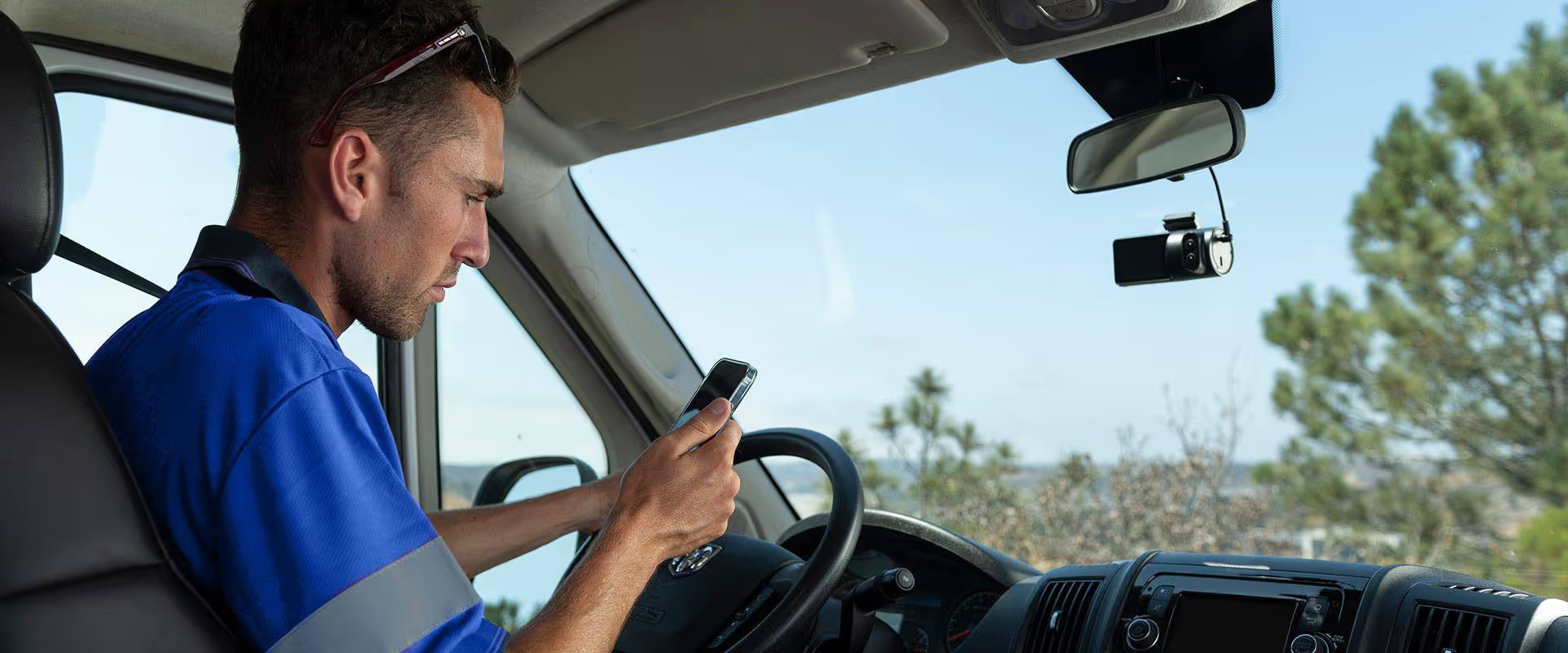
- Add context to safety related events with Axxon Connected AI Dashcams.
Gives you a 360 degree view of the situation, road conditions, and can provide proof of service or delivery. - Stop these 8 bad driver habits with connected dashcams for your fleet.
- Pre-trip vehicle, safety, and operational inspections by drivers via a mobile app
- Preventive maintenance; track when your assets need maintenance and prevent unplanned failures
- Relevant driver, vehicle, and relevant company documentation in one place
- Regulatory compliance; actionable reports provide the data you need
- Track your safety KPIs with scheduled reporting and get actionable data
With Axxon Tracking, you have simple, yet powerful tools to effectively monitor and manage your vehicles, temperatures, and other assets.
We provide businesses in the Caribbean with Industrial IoT tracking devices and management tools. Based on Curaçao, we service other islands; Aruba, Bonaire, Sint Maarten, Antigua and Barbuda, Martinique, Guadeloupe, Barbados, Grenada, Anguilla, Dominica, Saint Lucia, Saint Kitts and Nevis, Saint Vincent, with GPS Tracking, Asset Tracking, and Remote Temperature Monitoring Solutions.